Current
Taeyeol Kim
팝이 된 사적인 사물들 : Still. Life. Pop
April 18 - May 8
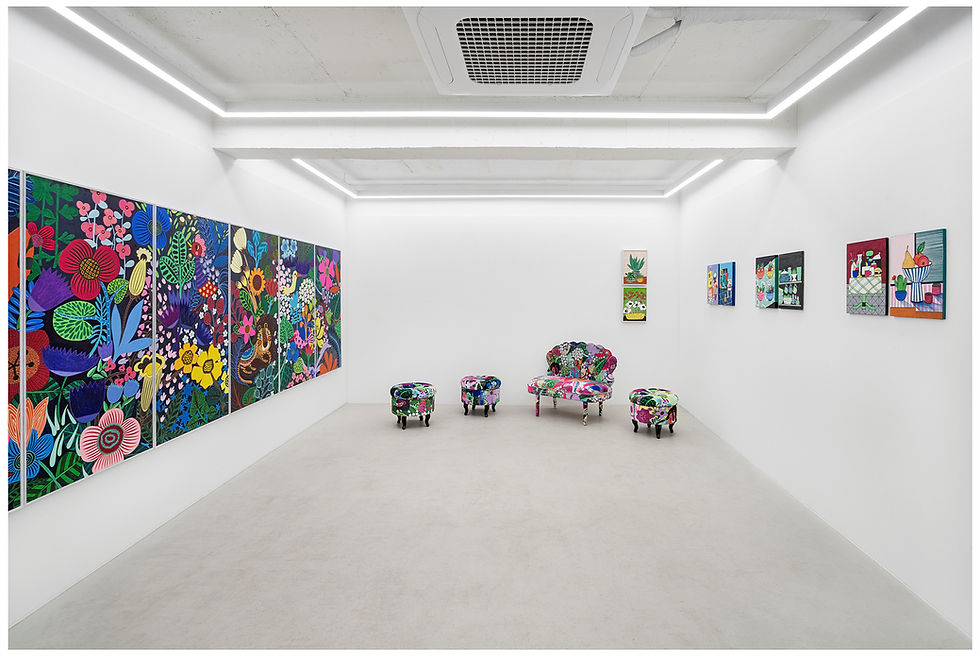
H-flux Galley is pleased to present , a solo exhibition by Taeyeol Kim, from April 18th to May 8th. A teacup perched precariously at the edge of a dining table, a teapot, layers of dishes and pots piled in the sink, or a vegetable basket placed in a corner of the kitchen. These are objects so familiar they barely register in our daily existence. The work of Taeyeol Kim makes these trivialities the center of attention. On her canvas, the mundane is no longer a backdrop; it becomes the subject. How and when did such ordinary, humble objects become art? In Western tradition, fine art was considered a realm of the "sublime," elevated above daily life. Since the establishment of modern aesthetics in the 18th century, art positioned itself as a noble, spiritual product, distancing itself from everyday realities. Particularly under the formalist lens of Modernism, the complexities of ordinary life were often considered ‘impure.’ Pop Art emerged as a reaction to this elitistism, bringing icons of mass culture like soup cans and Coca-Cola to the forefront. It was an attempt to return the quotidian to the center of art, creating works that reflect life rather than "art for art’s sake." In a similar vein, Minhwa (Korean folk painting) from the Joseon Dynasty, which is currently seeing a resurgence in Korea, had already integrated the everyday into artistic expression long before the advent of Western Pop Art. While borrowing the conceptual landscapes of the literati or the rigid styles of court paintings, Minhwa broke existing artistic frameworks through playful subversion and variation. While Pop Art used images of a consumer society, Minhwa differed by embedding the specific desires and hopes of common people within ordinary objects. However, both intersect in their "kitsch" sensibility: Minhwa dismantled the threshold of high art—dominated by the restrained, monochromatic tones of Neo-Confucian authority—by embracing vibrant primary colors and honestly affirming the desires of the masses. In this exhibition, Kim presents works that translate the everyday sensibilities of Minhwa into a contemporary language. Having mastered the traditional iconography of Minhwa over several decades, the artist now shifts her focus to subjects seen through a female gaze. By using personal possessions that provide an insight into her life—rather than adhering to standardized traditional motifs—Kim builds upon the profound expertise she has gained through years of study. This show is her attempt to expand the horizons of Minhwa, bridging tradition and her own reality. For instance, the kitchen cabinets in her work evoke the structure of traditional ‘Chaekgado’ (scholar’s paraphernalia), yet they are reconstructed with volume and perspective stripped away. Sausages, cups, apples, and cheese are densely arranged, transforming the canvas into a richly decorated space. From pots stacked in the sink to salad bowls, vases, and even cleaning utensils, these utterly mundane objects fill the canvas with brilliant patterns and colors. The combination of Minhwa’s multi-focal perspective (revealing top and side views simultaneously) and inverse perspective (adjusting size based on psychological importance) liberates the viewer from convention, offering a fresh, playful look at ordinary life. This approach recalls the paintings of Henri Matisse, who covered interior spaces with colors and patterns, blurring the distinction between subject and background. Just as Matisse expressed vitality discovered in Mediterranean light and exotic objects, Kim reconstructs her scenes with vibrant color and ever-changing perspectives. While traditional Minhwa dealt with stylized motifs (including peonies, for instance, or the ten traditional symbols of longevity), Kim focuses on small objects that have never been associated with deeper meaning. She focuses instead on items like cutlery, crockery, and cleaning utensils—often overlooked due to their ubiquity—and transforms them into a delightful kind of artistic language, far removed from a realistic depiction. This can be seen as a "Pop" experiment that inherits the joyful spirit of traditional Minhwa while elevating marginalized or insignificant subjects to the center of modern art. Behind this transformation of the banal lies a narrative of seventy years of female existence. Decades of endurance and devotion to supporting a husband and raising children within a patriarchal society are concentrated in these works. Just as sewing was a quiet form of escapism for Joseon-era women—helping them tolerate a grueling life and manage their emotions stitch by stitch—Minhwa became the artist's means to break free from the constraints of reality and find herself. Every hour spent holding a brush became a meditative period in which distractions vanished, and art demanded consistency and discipline. Thus, her work is not a reproduction of reality; it is personal freedom, redeeming herself from the restrictions of her former life and awakening an ego long suppressed.